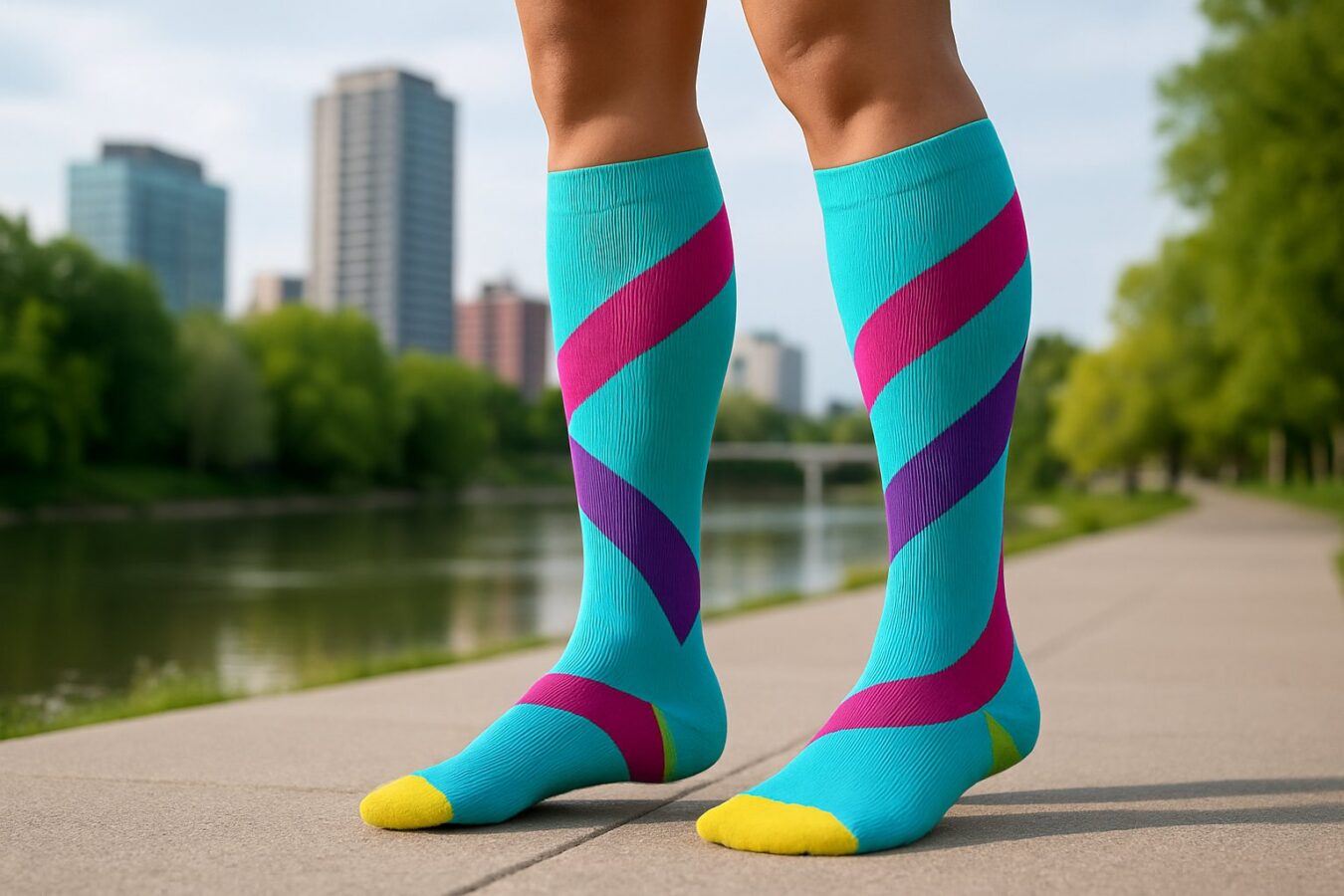
Trusted Compression Socks in London Ontario
If you’re looking for compression socks in London Ontario, you’ll spot plenty of options at medical supply stores, pharmacies, and foot care clinics across the city. Both over-the-counter and prescription-grade styles are available, so it’s not tough to find something that fits your needs.
These therapeutic socks use graduated pressure to boost blood circulation and reduce swelling. They help relieve a variety of leg and foot issues, whether it’s from standing all day or dealing with a medical condition.
Compression socks squeeze hardest at your ankle, then get gradually looser up your leg. That pressure helps push blood back toward your heart, making it easier for your body to keep things moving.
Some folks need them for issues like varicose veins or lymphedema. Others just want less leg fatigue after a long shift on their feet.
I’ve looked into the best places to buy compression socks locally, plus the different types and what to think about when picking the right style. From how these socks work to finding someone who can fit you properly, I’ll walk you through what matters for compression therapy in London Ontario.
What Are Compression Socks and How Do They Work?
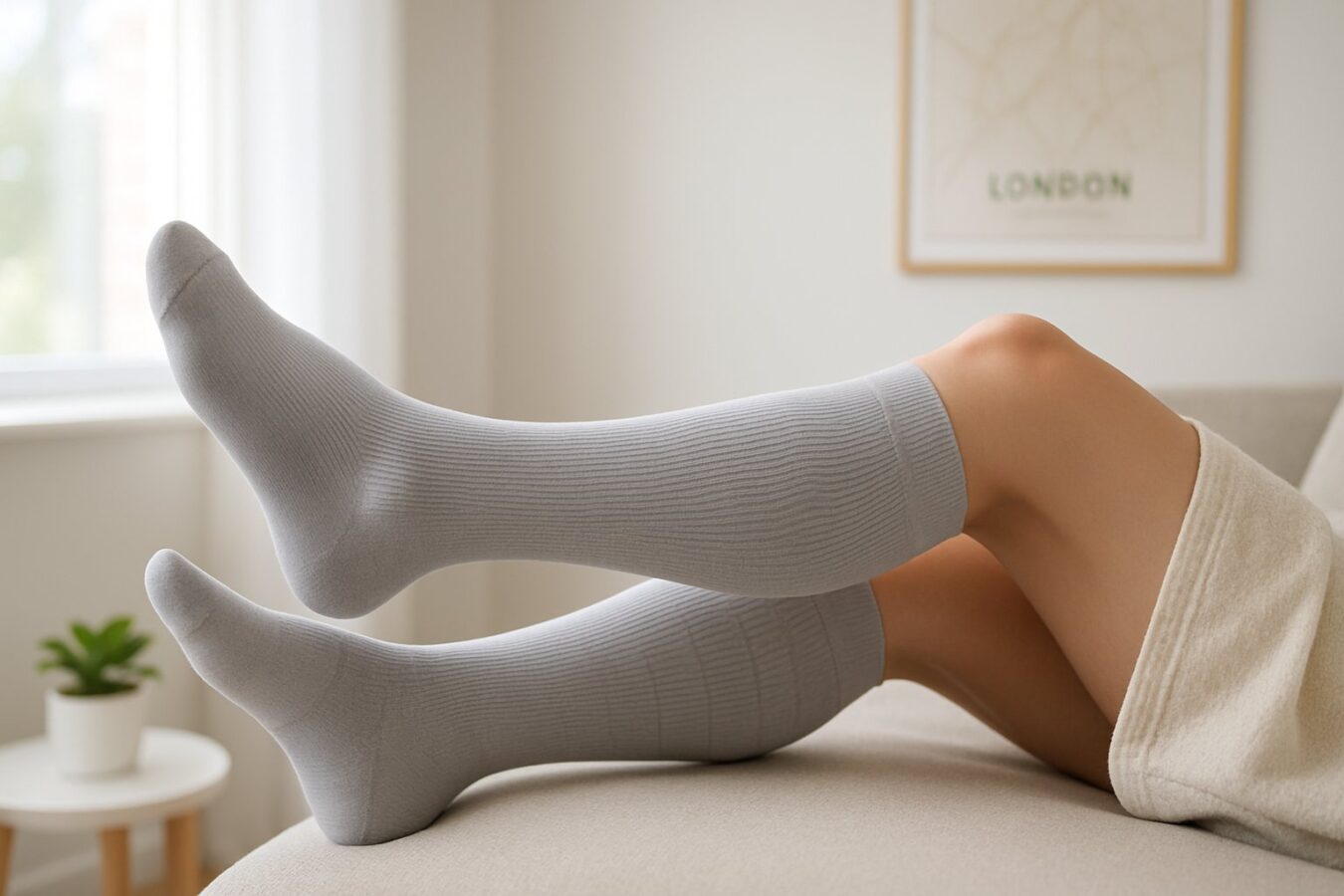
Compression socks use graduated pressure, tightest at the ankle and easing up the leg. This helps move blood up toward your heart and keeps swelling down.
Definition of Compression Socks
These are specialized socks or hosiery designed to squeeze your legs and feet in a controlled way. Unlike regular socks, they use elastic fibers woven to create that therapeutic pressure.
Compression socks come in knee-high, thigh-high, and even full pantyhose versions. You can pick open-toe or closed-toe, depending on what feels best.
Compression therapy gives your veins and muscles a bit of extra support. If your vein valves aren’t doing their job, these socks can help move blood back to your heart.
Doctors often suggest them for people with circulation problems or swelling. Athletes like them too, for recovery and performance.
How Compression Socks Improve Blood Flow
The whole idea is the pressure gradient—tightest at your ankle, then lighter as you go up. That helps push blood upward, fighting gravity.
When your veins get that gentle squeeze, blood moves faster. This makes it less likely to pool in your lower legs or form clots.
The socks also support your calf muscles. As you walk, your muscles naturally help move blood, and the socks give an extra boost.
By keeping things moving, compression socks help clear out waste products that make your legs feel tired. It’s a noticeable difference after a long day.
Compression Levels and Graduated Pressure
Compression levels use millimeters of mercury (mmHg) to measure pressure. Mild compression (8-15 mmHg) is great for everyday comfort and travel.
Moderate compression (15-20 mmHg) tackles minor swelling or early varicose veins. Firm compression (20-30 mmHg) is for more serious stuff, like moderate venous insufficiency.
Medical-grade compression above 30 mmHg usually needs a professional fitting. If you haven’t worn these before, I’d start low and see how you feel.
The graduated pressure—tight at the ankle, looser higher up—supports your circulation naturally. It works with your body, not against it.
Key Health Benefits of Compression Socks
Compression socks target blood flow, reduce swelling, and help muscles recover faster. They’re a practical fix for common leg issues and can help you stay active longer.
Reducing Swelling and Discomfort
Swelling happens when fluid builds up in your legs and feet, especially if you sit or stand for ages. Compression socks apply gentle pressure, nudging blood back toward your heart.
With better blood flow, less fluid gets stuck in your tissues. The pressure is strongest at your ankle and fades as it goes up your leg.
Key benefits for swelling:
- Less fluid in your legs and feet
- Lower pain after long periods on your feet
- More comfort during the day
- Legs feel lighter at night, making sleep easier
I usually notice results within a few hours, especially if I put the socks on early, before swelling kicks in.
Prevention and Management of Varicose Veins
Varicose veins show up when blood pools in your leg veins, making them bulge and twist under the skin. Compression socks help by keeping blood moving upward, not letting it settle.
If you already have varicose veins, compression can slow them down. The socks support weak vein walls and keep circulation steady.
Benefits for varicose veins:
- Less visible spider veins
- Reduced aching or throbbing
- Fewer new veins popping up
- Lower risk of clots
Wearing 20-30 mmHg compression can really cut down on symptoms. Consistency is key; I wear them during the day for best results.
Enhancing Recovery for Athletes
Athletes often use compression socks to recover faster after tough workouts. Better blood flow helps clear out waste products and brings in fresh oxygen.
That means your muscles repair quicker, with less soreness. During exercise, compression can also reduce muscle vibration, which helps fight fatigue.
Recovery perks:
- Less soreness after training
- Faster removal of lactic acid
- Swelling in feet and ankles goes down
- You bounce back quicker for your next workout
A lot of pros wear them for a few hours post-training, when recovery matters most.
Medical Conditions Treated with Compression Socks
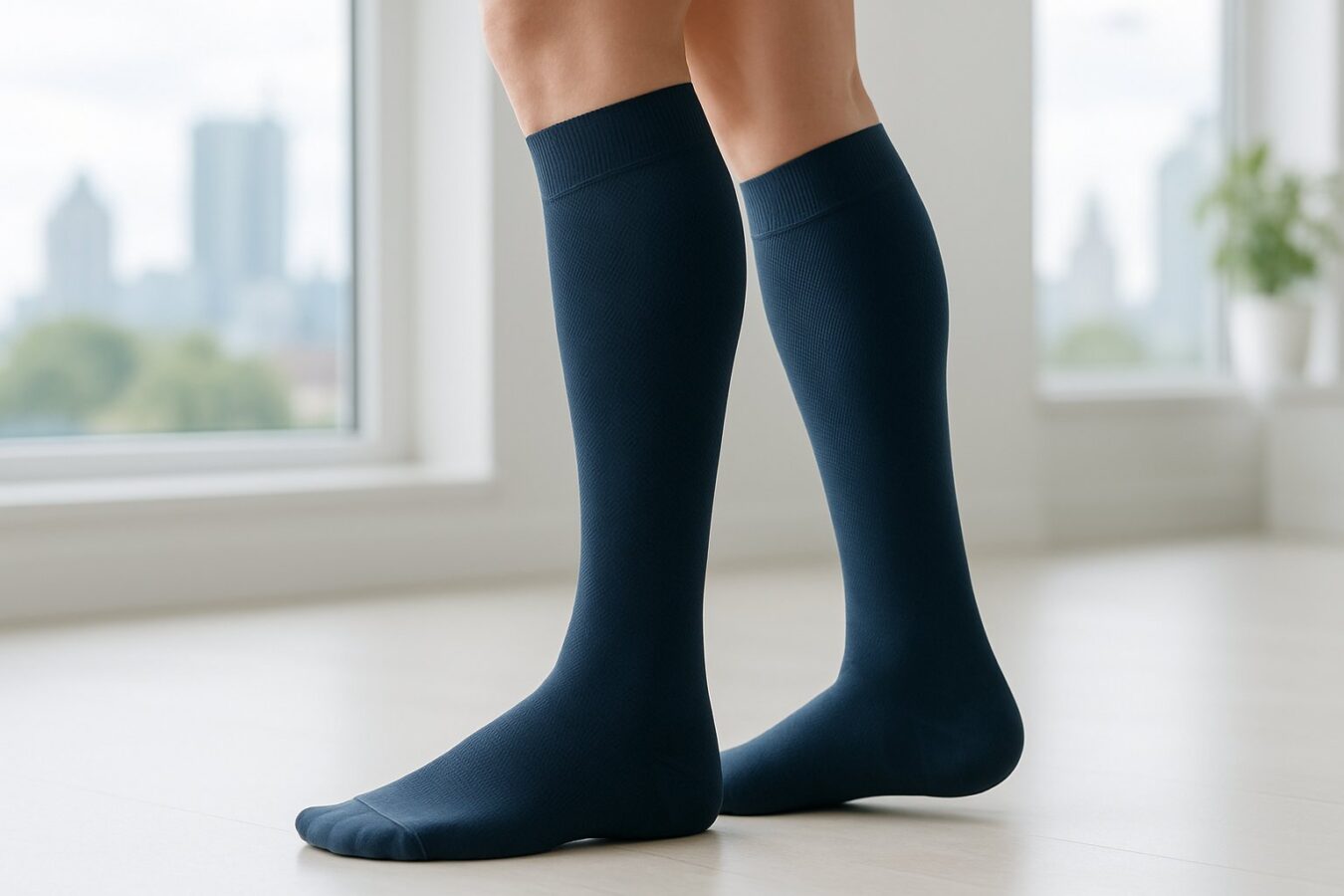
Compression socks are a go-to for treating circulation and blood flow problems in the legs. They help with everything from chronic vein issues to preventing blood clots and easing pregnancy-related swelling.
Chronic Venous Insufficiency
Chronic venous insufficiency crops up when your leg veins can’t pump blood back to your heart very well. Damaged or weak vein valves are usually to blame.
You might notice swelling, aching, or heaviness that gets worse as the day goes on. Sometimes, varicose veins, skin changes, or even leg ulcers show up if things get bad.
Compression therapy helps by giving your veins a boost, making it easier for blood to move upward. The pressure is strongest at the ankle, tapering off as it goes up.
Some real-world benefits:
- Less swelling and pain in your legs
- Better circulation overall
- Less blood pooling in your lower legs
- Slower progression of vein issues
Most people with moderate cases use 20-30 mmHg compression. For severe cases, doctors might prescribe 30-40 mmHg.
Deep Vein Thrombosis Prevention
Deep vein thrombosis (DVT) happens when clots form in deep leg veins—a serious risk. I suggest compression socks for anyone at high risk, like after surgery or during long flights.
Risks go up with bed rest, long travel, pregnancy, and some health conditions. If a clot breaks loose, it can travel to your lungs.
Compression garments prevent clots by keeping blood moving, not letting it sit in your legs. The pressure gradient does the trick.
Hospitals often put patients in compression socks during recovery. On long flights, I always slip them on to avoid “economy class syndrome.”
Prevention tips:
- 15-20 mmHg for general prevention
- 20-30 mmHg for higher risk
- Wear socks when you can’t move around much
- Move your legs when you can—don’t just rely on the socks
Pregnancy-Related Leg Issues
Pregnancy brings its own set of leg problems, and compression socks can really help. Swelling, varicose veins, and discomfort are common as the baby grows.
Your uterus puts pressure on pelvic veins, slowing blood flow from your legs. Hormones also make vein walls slacker, so blood doesn’t move as well.
Typical symptoms: swollen ankles, cramps, restless legs, and new varicose veins. These often get worse as pregnancy goes on.
Compression socks support your veins when your body needs help. Many pregnant women feel a lot better, with more energy and less heaviness.
I usually suggest 15-20 mmHg compression for pregnancy, unless your doctor says otherwise. Knee-high socks are popular since most swelling is in the lower legs.
Maternity styles have extra room and breathable fabrics, which is a big plus when your body is changing so much.
Types of Compression Garments Available in London Ontario
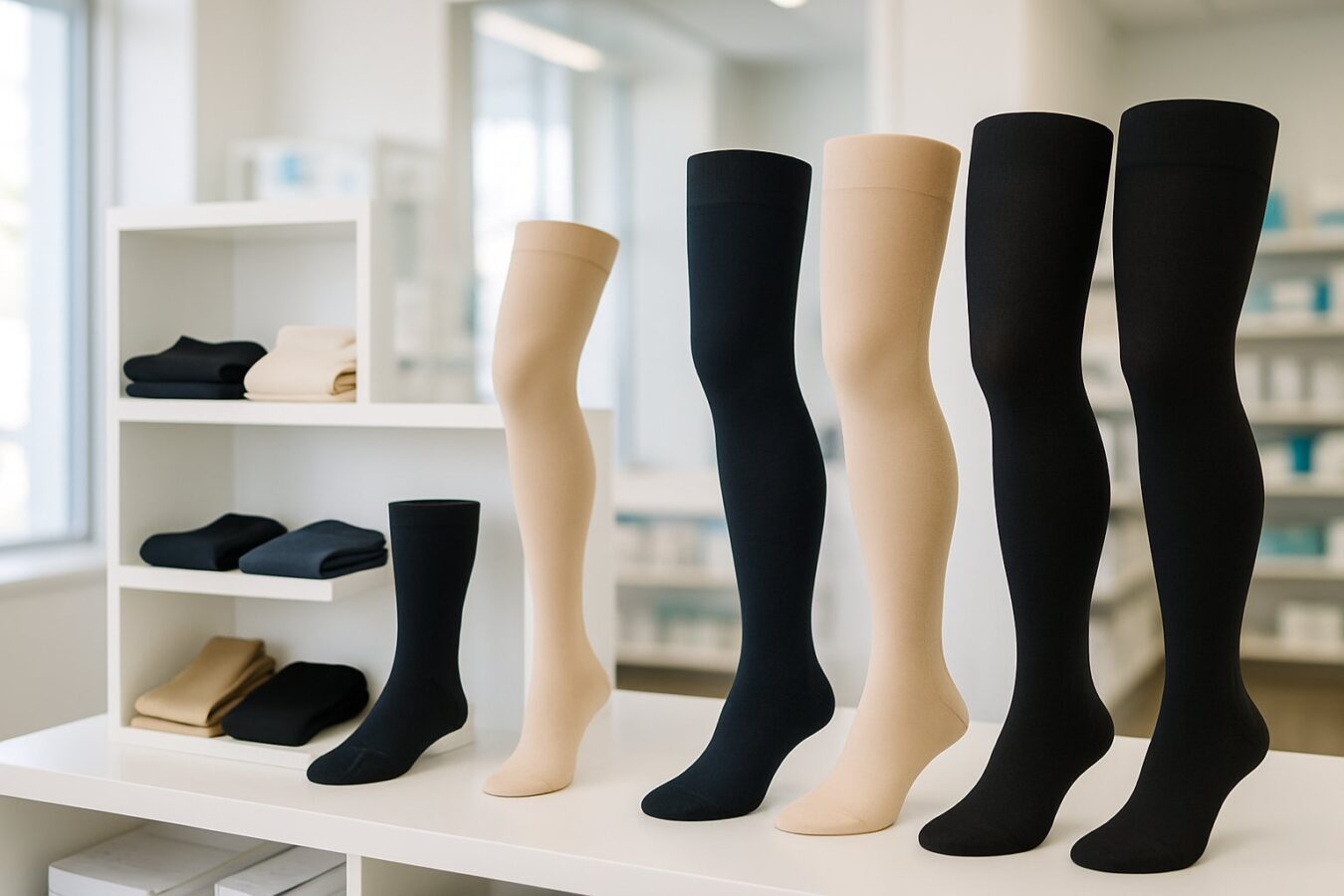
In London Ontario, you’ll find a range of compression garments for different medical needs and activity levels. There are regular stockings, socks, and custom-fitted options, all made from various materials and offered by different brands.
Compression Stockings vs. Compression Socks
Compression socks and stockings aren’t quite the same. Socks usually cover just your foot and lower leg up to the knee. They’re great for daily wear and mild circulation issues.
Stockings, on the other hand, can reach up to your thigh or even be full pantyhose. Compression stockings and hose are better for more serious problems.
Socks tend to offer lighter compression (15-20 mmHg). Stockings can go up to 40-50 mmHg for bigger medical concerns.
Stockings are often the better pick for varicose veins or chronic venous disease. Socks are handy for athletes, travellers, or anyone on their feet all day.
Custom-Fitted Compression Garments
Custom-fitted compression garments give you a perfect fit and targeted therapy. Custom fitted compression garments require a professional to take detailed measurements of your legs.
These are best for tricky cases like lymphedema, severe varicose veins, or post-surgical swelling. The process involves measuring your legs at different times of day, since swelling can change.
Custom options cost more up front, but they usually last longer and work better. Insurance often covers them with a doctor’s prescription.
Materials, Styles, and Brands
Modern compression garments use all sorts of materials. Most mix nylon, spandex, and elastane for stretch and durability. Some have moisture-wicking features so you don’t get sweaty.
You can pick from:
- Open-toe or closed-toe
- Sheer or opaque
- Lots of colors and patterns
- Seamless styles for sensitive skin
SIGVARIS compression stockings are a top brand in London Ontario, offering everything from mild to medical-grade compression.
Other good brands: Jobst, Juzo, and Medi. Each has its own perks, like reinforced heels or antimicrobial treatments.
I’d choose materials based on how active you are and what feels good on your skin. Synthetic blends are great if you’re on the move, while cotton blends are super comfy for everyday wear.
How to Choose the Right Compression Socks
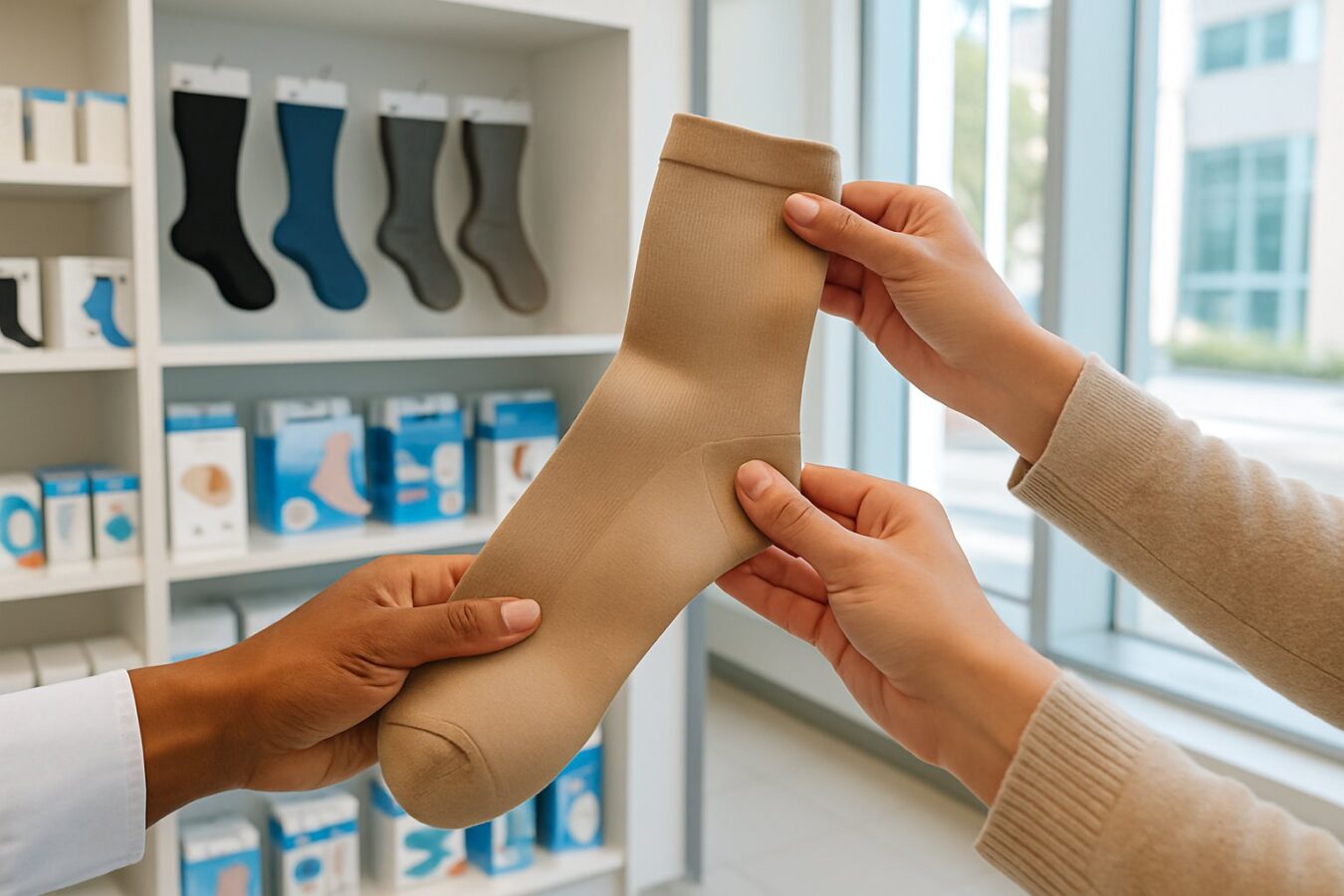
Choosing compression socks isn’t as simple as grabbing the first pair you see. You need to understand compression levels, get accurate measurements, and chat with a healthcare professional before you buy.
These factors really affect whether your socks will actually help you. It’s a bit more personal than most people expect.
Assessing Compression Levels
Compression levels use millimeters of mercury (mmHg) as their measurement. I’ve noticed that people need different strengths depending on their health and what their days look like.
Light compression is 8-15 mmHg. This gentle pressure works for daily use if you’re on your feet a lot or stuck at a desk.
It helps with mild swelling and can make long flights or car rides more comfortable. Moderate compression sits at 15-20 mmHg.
I see this level recommended for mild varicose veins or leg fatigue. Pregnant women often do well with this range.
Firm compression is 20-30 mmHg. This is a bigger step up, so you should consider it carefully.
Chronic venous issues or post-surgery recovery sometimes call for this strength. Extra firm compression, over 30 mmHg, is a whole other story.
Only use this if your doctor prescribes it. It’s for serious conditions like severe varicose veins or lymphedema.
Choosing the right compression level should fit your symptoms and medical history. More pressure isn’t always better.
Measuring for Proper Fit
Getting the right fit is crucial. Take your measurements in the morning before swelling sets in.
Measure your ankle at its narrowest spot, just above the bone. That’s your starting point for graduated socks.
Then, measure your calf at the widest part. This helps keep the sock from rolling or bunching up.
For knee-high socks, measure from your heel to just below your knee. If you want thigh-highs, measure all the way to your upper thigh.
Measure both legs—surprisingly, they’re often not the same size. Use the bigger measurements so both legs stay comfortable.
Jot your numbers down and compare them to the brand’s size chart. Don’t assume you’re the same size across different companies—sizing can vary.
Consulting with Physicians
Honestly, it’s smart to talk to a healthcare provider before starting compression therapy. They can check your circulation and decide if compression socks make sense for you.
Your doctor will look at your medical history and symptoms. They can spot issues that might affect which compression level you need.
Some conditions make compression therapy risky. Blood clots, serious heart problems, or certain skin conditions can be red flags.
If you need medical-grade socks, your doctor can prescribe them. Sometimes insurance will help pay for prescribed compression gear, and that’s a nice bonus.
I always suggest bringing your measurements to the appointment. It saves time and helps your doctor give you better advice.
Where to Buy Compression Socks in London Ontario

London’s got plenty of places to find compression socks. You can check out medical retailers with certified fitters, regular pharmacies, or even shop online with local delivery.
Getting Started with Compression Therapy
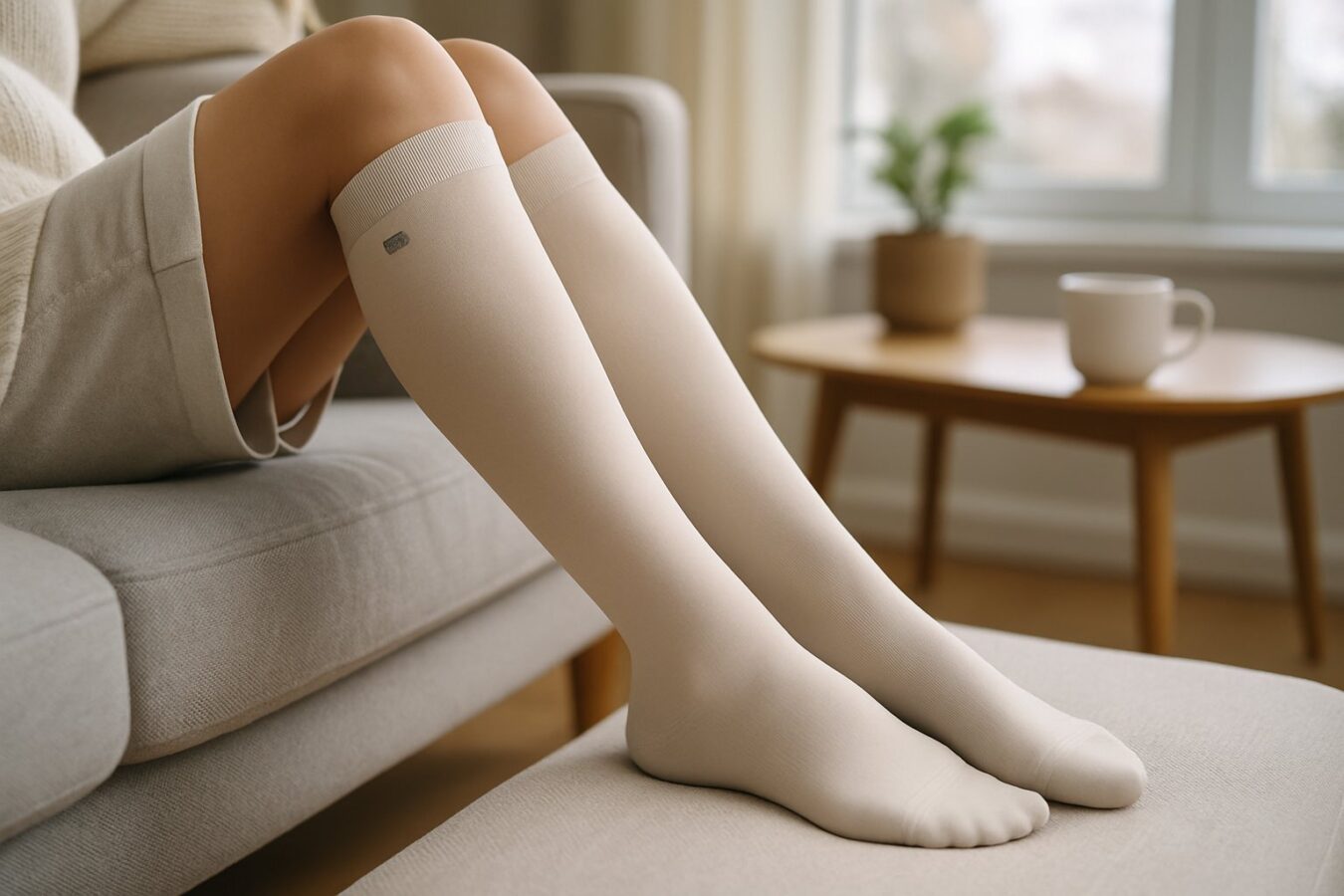
Starting compression therapy means getting a proper medical checkup first. Your doctor will look at your situation and figure out what pressure and style you need.
Medical Assessment and Prescription
Book a visit with your doctor or a specialist. Tell them about any leg pain, swelling, or tiredness you feel during the day.
The doctor will check your legs and might run extra tests. They’re looking for things like venous insufficiency or varicose veins that compression socks can help.
Medical compression therapy just means wearing special socks that squeeze your legs a bit to help blood flow. The pressure helps push blood back up toward your heart.
Your doctor will write a prescription for the right compression level. Usually, it’s 15-20 mmHg for mild symptoms and up to 30-40 mmHg for tougher cases.
The prescription needs to mention your diagnosis, pressure level, and the type of sock. Insurance companies want these details for coverage.
Participating in Recovery Programs
Some clinics offer programs to help you get used to compression socks. They’ll teach you how to put them on and how long to wear them.
If you’re new to this, start slow. Try wearing them for 2-3 hours a day and increase as your legs get used to the pressure.
Physical therapy might help too. Certain exercises can boost your circulation and strengthen your legs.
Compression garments work by squeezing your limbs gradually to help your blood vessels. You’ll need to wear them daily for the best results.
Some people feel better in days, but for others it takes weeks. Everyone’s different.
Follow-Up and Ongoing Care
Your doctor or foot care nurse should check on your progress during the first few months. These visits help make sure things are working and let you talk about any problems.
Keep a simple log of how your legs feel each day. Note changes in swelling or pain, or if you feel more energetic.
Your needs might change over time. Things like pregnancy, weight changes, or health issues can mean you need a new pressure level or sock style.
Replace your socks every 3-6 months, or sooner if they get stretched out. Old socks just don’t work as well.
Book a checkup with your doctor every year. They’ll see if your current socks still fit your needs and update your prescription if needed.
Insurance usually wants a new prescription each year, so plan ahead to avoid gaps in coverage.
Frequently Asked Questions
People often wonder about compression levels, sizing, and where to buy good socks in London. Knowing which brands to look for and understanding prescription rules can make shopping way easier.
What are the best rated compression socks available in London Ontario?
Medical supply stores in London carry top brands like SIGVARIS and Jobst. These are favorites among healthcare pros for their reliable compression.
SIGVARIS compression products come in several levels, from 15-20 mmHg up to 30-40 mmHg. Their socks deliver the strongest squeeze at the ankle.
Local spots like Shoppers Home Health Care and Yurek Home Health stock these brands. Ask the staff which models are most popular for your situation.
CEP and Sockwell are also solid choices, especially if you’re active. They focus more on performance and recovery.
Where can I find a specialist store for compression socks in London Ontario?
Check out medical supply stores that focus on compression therapy. Yurek Home Health on Wharncliffe Road South has a big selection and helpful staff.
Shoppers Home Health Care has several London locations. They employ certified fitters who can help with sizing and picking the right pressure.
Garnet Orthopedic Solutions specializes in compression garments and offers professional fittings. They sell both over-the-counter and prescription options.
MHP Therapy is another good spot if you want staff who really know the medical side of things.
Are there specific brands of compression socks recommended by healthcare professionals in London Ontario?
SIGVARIS gets a lot of recommendations for medical-grade compression. They stick to strict standards and offer precise pressure.
Jobst is another top pick for treating venous problems. Many doctors trust Jobst for chronic issues like venous insufficiency or lymphedema.
Physiotherapy clinics, like Aspire Physiotherapy, often carry Medi socks. These are made for specific medical needs.
For sports, some healthcare folks suggest CEP or Compression brand socks. They’re all about muscle recovery and performance.
Can I purchase medical-grade compression socks without a prescription in London Ontario?
You can buy socks up to 20-30 mmHg at most medical supply shops without a prescription. Anything higher usually needs a doctor’s note.
Those higher levels—over 30 mmHg—are prescription-only to keep things safe for people with serious circulation issues.
Pharmacies like Shoppers Drug Mart and Rexall carry non-prescription socks in the lighter ranges. You’ll find options from 8-15 mmHg up to 20-30 mmHg.
Still, if you have a medical condition, talk to your doctor first. They’ll know if you need prescription-strength socks.
How do I choose the correct size and compression level for compression socks?
Measure your ankle, calf, and thigh at the right spots. Most stores have guides or staff to help you get it right.
Compression levels go from mild (8-15 mmHg) for daily wear to firm (30-40 mmHg) for medical needs. Start with lower pressure unless your doctor says otherwise.
Getting the size right really matters. Socks that are too tight can cut off circulation, and loose ones just don’t help.
If you’re not sure, get fitted at a place like Shoppers Home Health Care. Their certified fitters can match you with the right size and pressure.
What are the benefits of wearing compression socks for athletes in London Ontario?
When I wear compression socks during exercise, my blood circulation improves. This means more oxygen actually gets to my leg muscles.
With better circulation, I notice a boost in endurance. Sometimes, it even feels like my overall performance gets a subtle lift.
Compression socks also cut down on muscle vibration while I’m active. That’s supposed to help with muscle fatigue and maybe even prevent those annoying micro-tears.
After a tough workout, recovery seems a bit quicker if I’ve worn compression socks. The increased blood flow helps clear out waste products, so muscle soreness isn’t as bad.
If you’re around London, Ontario, you can find athletic compression socks at places like Runners’ Choice on Dundas Street. They’ve got options made specifically for sports, and most of them use moisture-wicking materials, which is a nice touch.