
What Sets Top Breathwork Coaches in North America Apart
Breathwork can feel simple at first. Good coaching is not. The quality of the coach affects safety, pacing, and the kind of result a client is likely to get from each session.
In North America, clients often compare online options across cities, states, and provinces. That makes it important to know which traits signal real skill, and which ones are just polished marketing.
Personalized plans start before the first guided session
Top coaches do not begin with a one-size-fits-all routine. They start with an intake process that looks at goals, stress patterns, health history, and prior experience with regulated breathing practices.
This matters because the wrong starting intensity can backfire. A client dealing with panic symptoms, trauma history, or chronic overstimulation may need slower pacing and tighter structure than someone seeking focus or performance support.
Strong intake assessments usually clarify a few core points:
- What the client wants to change, such as stress reactivity, sleep, or emotional regulation
- What constraints exist, including medical concerns, sensitivity to activation, or limited practice time
- How progress will be tracked across several sessions, not just judged by one intense experience
Without that foundation, breathwork can become random. The client may leave feeling something happened, but have no clear path for building durable change.
Facilitation skill shows up in psychological safety
The best breathwork coaches know that technique alone is not enough. They can read a client’s state in real time and adjust the session before discomfort turns into overwhelm.
Psychological safety is not soft language or empty reassurance. It means the client knows what is happening, feels free to pause, and does not feel pushed into emotional intensity to prove the session worked.
A common failure mode is over-facilitation. Some coaches talk too much, add pressure, or treat strong release as the goal. That can make clients feel exposed or dysregulated, especially in group settings or online sessions where cues are easier to miss.
Top facilitators manage a tradeoff. They need enough structure to keep the process contained, but enough flexibility to respond to what the client is actually experiencing.
They explain outcomes, pacing, and limits clearly
Clear communication separates experienced practitioners from vague ones. A strong coach explains what a session is designed to do, what it is not designed to do, and how progress may unfold over time.
Top coaches also explain why they choose specific breathwork techniques for one client and not another. That level of clarity helps clients understand the pacing, and it reduces the risk of mismatched expectations.
That includes realistic language about intensity. Not every session will feel profound. Sometimes the work is subtle, and that can be more useful than a dramatic experience that is hard to integrate.
When communication is weak, clients often chase outcomes that do not fit their actual needs. They may expect instant healing, misread normal responses as failure, or stay in a program that lacks a defined process.
They use breathwork within a broader framework
Breathwork works better when it fits into a wider method. Many top coaches combine it with somatic tools, mindfulness practices, or coaching frameworks that help clients notice patterns and apply what they learn between sessions.
This blend matters because breathing sessions can surface insight without creating change on their own. If the coach cannot help the client integrate that experience, the work may feel powerful in the moment but fade quickly afterward.
There is also a practical tradeoff here. A broad toolkit is useful, but only if the coach knows when to use each method and when not to. Mixing too many approaches without a clear rationale can confuse clients and dilute results.
One way to assess this is to see how the coach describes training and scope. A thoughtful explanation often tells you more than a long list of modalities, and a careful breathwork certification checklist can help you spot the difference between structured preparation and surface-level credentials.
Accessibility and support matter across North America
Strong coaching is not only about what happens during the session. It also depends on whether clients can book consistently, attend from their location, and get support between sessions when needed.
That is especially relevant across North America, where time zones, travel, and licensing boundaries can affect scheduling and continuity. A coach may be excellent in session but still hard to work with if booking is inconsistent or follow-up is unclear.
Useful signs of accessibility include responsive communication, reliable online delivery, and simple session logistics. If those systems are missing, clients often lose momentum, even when the actual breathwork is solid.
Before committing, look at how the coach assesses fit, sets boundaries, and supports ongoing practice. Those details usually tell you more than branding does.
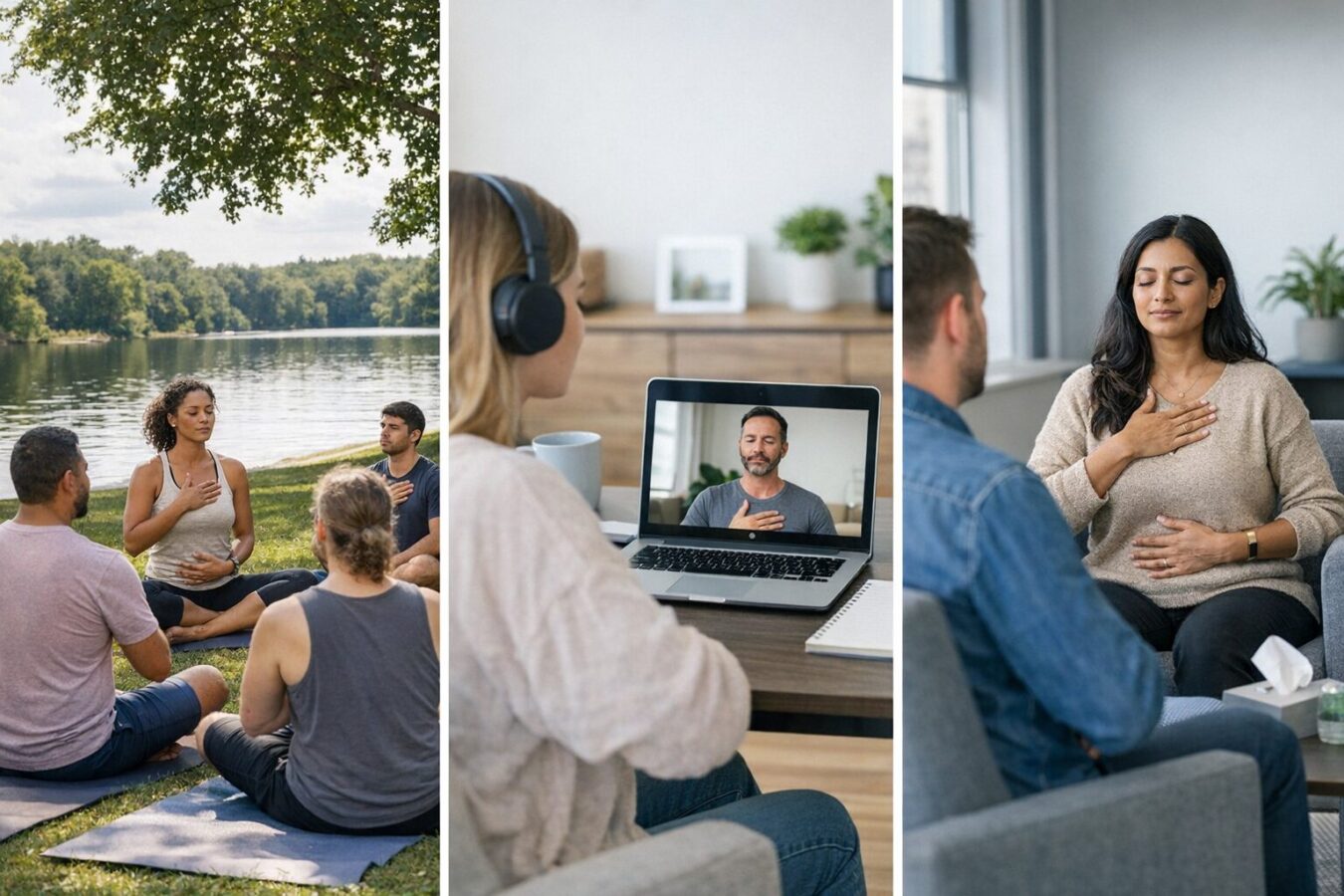
Comparing Breathwork Coaching Formats in North America
Breathwork coaching can look similar on a sales page and feel very different in practice. The format changes the pace, the level of support, and the kind of results you can realistically expect. If you pick the wrong setup, you may pay for intensity you do not need, or get too little structure for the issues you want to address.
Online versus in-person breathwork coaching
Online coaching gives you wider access across North America. It can also make scheduling easier, especially if you want a specific coach or method. The tradeoff is that a coach sees less of your body language, posture, and stress response through a screen.
In-person sessions can offer better real-time observation. That matters if a coach is tracking breath pace, tension patterns, or emotional overload. The limitation is simple, travel time, room availability, and fewer choices in your local area can narrow your options fast.
A common mistake is assuming in-person is always deeper. Sometimes online coaching works better because the client feels safer at home and shows up more consistently. The better question is how much feedback and containment you need during a session.
Single sessions versus multi-week coaching packages
A single session can be useful if you want to try a method, meet a coach, or work through one clear issue. It is also the lower-risk option if you are unsure about the coach’s style. The downside is limited integration, especially if strong emotions or habits come up after the session ends.
Multi-week packages are better for pattern change. They give space to adjust technique, track reactions, and build tolerance over time. That structure matters because breathwork can feel powerful in the moment while producing uneven results without follow-up.
One failure mode is buying a long package too early. If the coach uses a pace or philosophy that does not fit you, the commitment can become expensive friction instead of real progress.
Live guided sessions versus self-paced breathwork programs
Live guidance helps when timing, rhythm, and regulation need active support. A coach can slow you down, change the exercise, or stop the session if you are pushing too hard. That reduces the risk of turning breathwork into a performance task.
People comparing breathwork training options often overlook the role of live correction. A polished video library can still leave you guessing if your breath pattern is too forceful, too shallow, or simply mismatched to your goal.
Self-paced programs are more flexible and often cost less. They work best for people who already know how their body responds and can notice signs of strain early. If you tend to overdo practices or skip consistency, self-paced formats can quietly fail.
Beginner-friendly coaching versus advanced transformational work
Beginner coaching should focus on pacing, safety, and simple repeatable practices. It should also explain what normal discomfort feels like versus what signals a session needs to stop. Without that foundation, people can mistake overwhelm for progress.
Advanced transformational work usually goes deeper into emotional release, identity shifts, or long-form sessions. That can be useful, but only if the coach has strong screening and containment skills. The risk is not just intensity, it is poor matching between the client’s capacity and the method being used.
Membership models can help people stay consistent after private coaching or an initial course. They often include group calls, practice libraries, or shared accountability. That ongoing structure is helpful if your main challenge is maintaining a regular practice.
Membership communities and ongoing support options
A practical way to compare offers is to check the coach’s stated scope, session length, and support between sessions against your own breathwork training criteria. If the language is vague, or everything sounds life-changing, that is a sign to ask sharper questions before you commit.
The tradeoff is depth. A membership usually offers broader support, not the focused attention of one-to-one coaching. If you need help with a specific emotional pattern or a strong physical response to breathwork, a community plan alone may not be enough.
The best format depends on how much guidance, flexibility, and follow-up you actually need. Before you buy, compare the coach’s level of feedback, the session structure, and the support available after difficult sessions.